• DBHQ
  • About
  • Episodes
  • Subscribe
  • Contact
Contrabass Conversations

Contrabass Conversations

double bass podcast

1044: Robin Kesselman on Bow Speed Geography

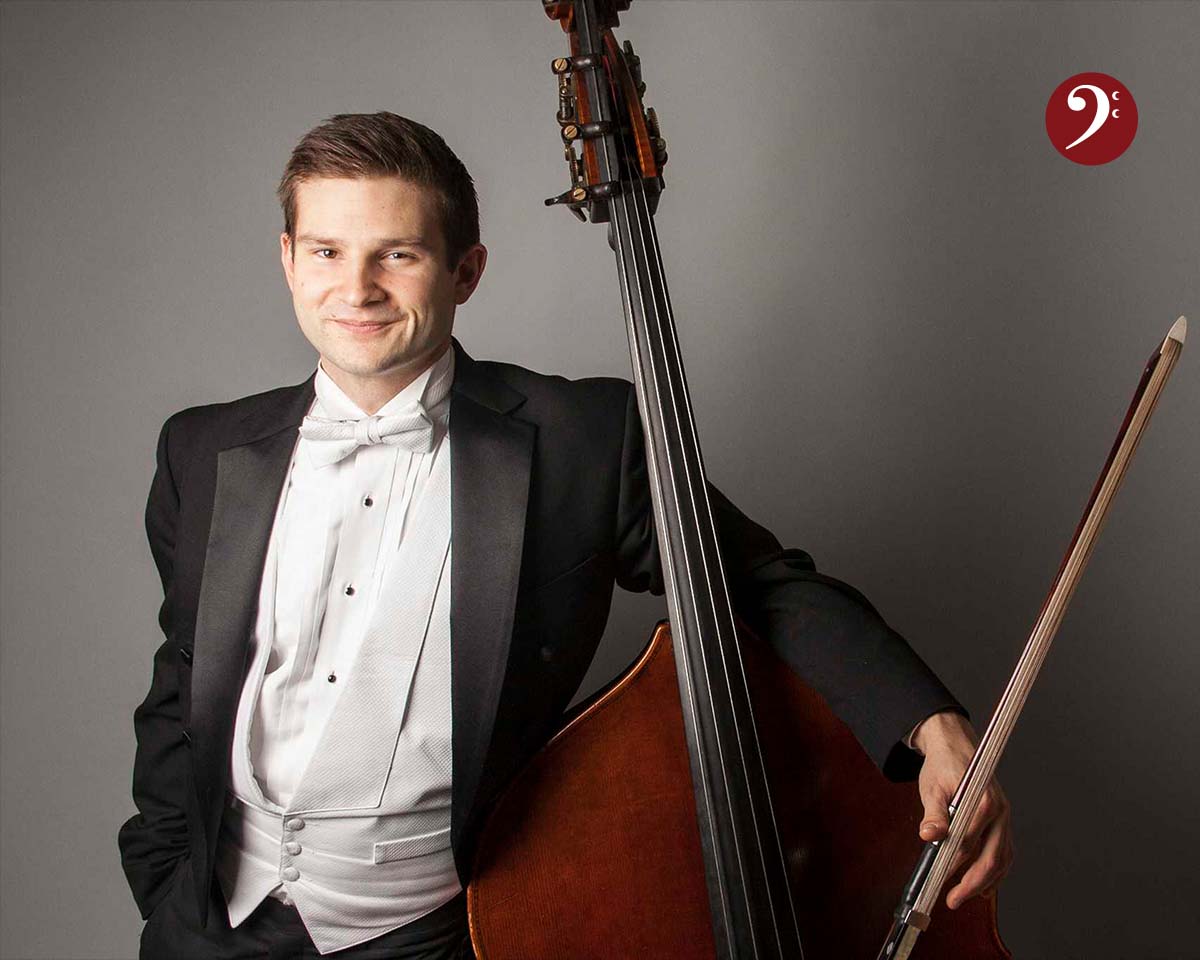
Photo courtesy of the Houston Symphony

Robin Kesselman is the author of Bow Speed Geography, which elegantly explores concepts of bow speed geography  in string playing, focusing on the importance of evenness in bow speed, control, and the application of bow speed.

We dig into life for Robin in the eight years since our past interview, the inspiration behind the book, and all kinds of topics surrounding bow speed, technique, and expressivity.  Enjoy, and you can pick up a copy of this great new resource at the ISB Store and Robertson and Sons.

Subscribe to the podcast to get these interviews delivered to you automatically!

Connect with us:

  • all things double bass
  • double bass merch
  • double bass sheet music

Thank you to our sponsor!

Upton Bass Rosin, developed by Gary Upton, boasts an excellent feel, response, and tone for double bass bows. Gary believes it’s the best bass rosin available. It’s appreciated by users like Blake Hinson from the New York Philharmonic for its quality and performance.  Learn more about Upton’s rosin, basses, and more at uptonbass.com.

  • theme music by Eric Hochberg
https://traffic.libsyn.com/contrabassconversations/Robin_Kesselman_mixdown.mp3

215: Robin Kesselman on audition strategies, injury recovery, and bow arm practicing

Houston Symphony principal bassist Robin Kesselman

Houston Symphony principal bassist Robin Kesselman

Today’s episode features Houston Symphony principal bassist Robin Kesselman.  Robin studied with David Allen Moore and Paul Ellison at the Coburn School of Music and the University of Southern California, and with Hal Robinson and Edgar Meyer at the Curtis Institute of Music.  He has also performed as Guest Principal Bass with the Saint Paul Chamber Orchestra, travelled internationally with both the Philadelphia Orchestra and the Los Angeles Philharmonic, and performed with the National, Atlanta, and Baltimore Symphonies.

During Robin’s time at USC, he sustained a playing injury that took him out of commission for a prolonged period.  We dig into how Robin ultimately recovered from this and how it changed his approach to practicing and performing on the bass, and how he practiced while he was out of commission.  This was a left arm injury, and Robin continued to practice open string and harmonics with the bow, going into his lessons and working on the Bottesini Concerto on open strings.  We also discuss how Robin approaches the audition process: his preparation strategies, his musical goals for an audition, and using visualization techniques.

We also feature excerpts from Krzysztof Penderecki’s Duo Concertante with Eunice Kim on violin.  Enjoy!

Interview Highlights

Discoveries During Playing Injury:

  • sitting in practice room – “this hurts, but it also still sounds bad” – the mistake of pushing through pain
  • this time spent not using his left hand ultimately took his bow game to a new level – he spent large amounts of time just practicing with the right hand – playing solos and excerpts on open strings / harmonics in lessons!
  • “the building blocks with which I was making my shapes were not completely honest” – referring to the bow arm
  • mental practice / visualization – he got into this during this time period
  • learning the difference between an ache and something more serious

Thoughts on Auditioning:

  • there’s nothing that isn’t practicable
  • timing and pulse
  • mathematical pulse/note division vs. feeling right
  • the fallacy of perfect audition rounds
  • similarities between prepping for an audition and a recital
  • auditions have to be an artistic endeavor and about musical expression
  • if you walk out and your whole goal is to play notes that are even and in tune, the second that one note isn’t exactly the same as another note you officially have nothing left to offer, because your single goal has crumbled
  • if your goal is to make lines and to make shapes and be expressive, it’s ok if one note is a little shorter than the others
  • philosophy from David: as soon as you come in and things are in tune and in time, you are officially at zero

The Audition Process in Detail:

  • record constantly during this whole process -throughout the whole day
  • first 50% of the interval
    • really hibernate and work things super slow – considerably under 50% tempo
    • move something up 40 clicks over a period of weeks
    • A and B lists that kind of parallel each other (one Mozart Symphony on one and one on the other, for example)
    • doesn’t play for anyone during this time – nothing’s put together – it’s all really cut up at this point
  • next 25%
    • buff out the edges, smooth out the music, give it a shine
    • playing with recordings, getting the flow right
  • last 25%
    • take the show on the road, play for anybody and everybody, start setting up mock auditions and lessons with other (non-bass) instrumentalists
  • the last week
    • go back to “hibernating”
    • stop playing for people – running rounds – 4-5 excerpts in a row
  • hours wise it’s similar through he whole process, but the hours are being used differently
  • all the way until audition time, there was never a day/time when he could not continue to make things better
  • have a specific game plan for those 20 minutes of warm-up once you arrive at the hall
  • bass players don’t hire bassists – committees of other instrumentalists do
http://traffic.libsyn.com/contrabassconversations/CBC_215_-_Robin_Kesselman_Interview.mp3
Facebook
Twitter
Instagram
YouTube

Copyright © 2026 · Maron Pro Theme on Genesis Framework · WordPress · Log in