• DBHQ
  • About
  • Episodes
  • Subscribe
  • Contact
Contrabass Conversations

Contrabass Conversations

double bass podcast

188: Ron Carter on technical development, an orchestral foundation, and developing the next generation of music lovers
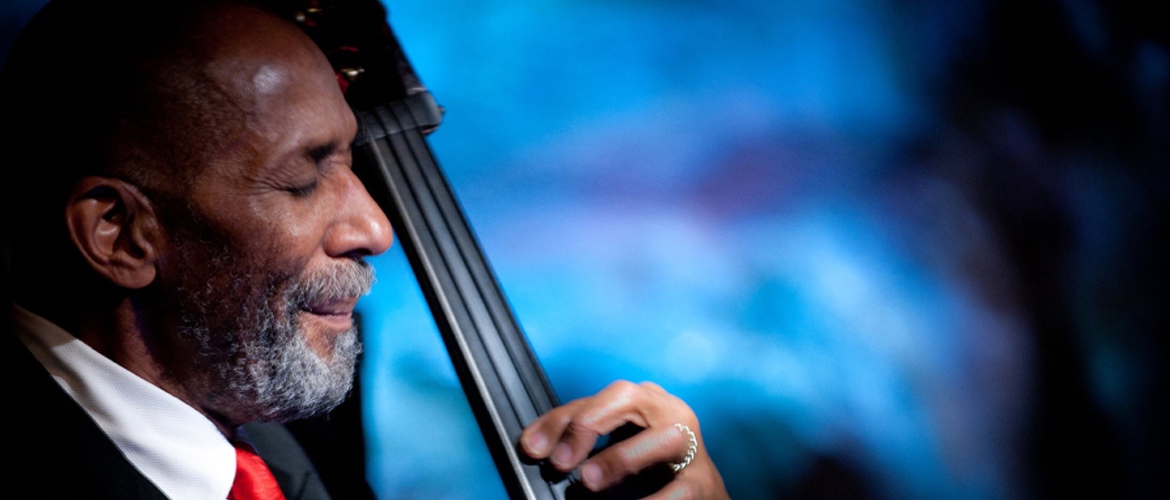
Jazz bass legend Ron Carter is featured on today's podcast episode

Jazz bass legend Ron Carter is featured on today’s podcast episode

I am thrilled to feature Ron Carter today on the podcast. If is one bassist in the world that truly needs no introduction, it’s Ron. Ron recently received the Guinness World Record title for most recorded jazz bassist in history, with well over 2200 recording credits to his name. From his work with the Miles Davis Quintet in the 1960s to his collaborations with musicians like Freddie Hubbard, Joe Henderson, Hank Jones, his numerous projects as a bandleader, and his work outside of the jazz realm with artists like Billy Joel and A Tribe Called Quest, Ron has truly shaped our conception of the sound of the double bass.

Ron has four books available:

  • Comprehensive Bass Method
  • Finding the Right Notes
  • Building Jazz Bass Lines
  • Ron Carter Collection

Be sure to check out these books, and you can find the video for Ron Carter Live here.  Ron’s extensive discography is available through this link.

I’d also like to welcome back our sponsor Discover Double Bass!  They have a 4 hour course on creating walking bass lines, with 55 HD video lessons in a step-by-step order to help you to master the style of walking bass. You can check out this course as well as many other offerings at discoverdoublebass.com/store.

If you’re new to Contrabass Conversations and are a jazz fan, then check out our episodes featuring Carlos Henriquez, Rufus Reid, Larry Gray, and Eric Hochberg for more conversations with great jazz artists.

http://traffic.libsyn.com/contrabassconversations/CBC_188__Ron_Carter_on_technical_development_an_orchestral_foundation_and_developing_the_next_generation_of_music_lovers.mp3

187: Chris Threlkeld-Wiegand on working at Robertson’s, building extensions, and aesthetic wood choices
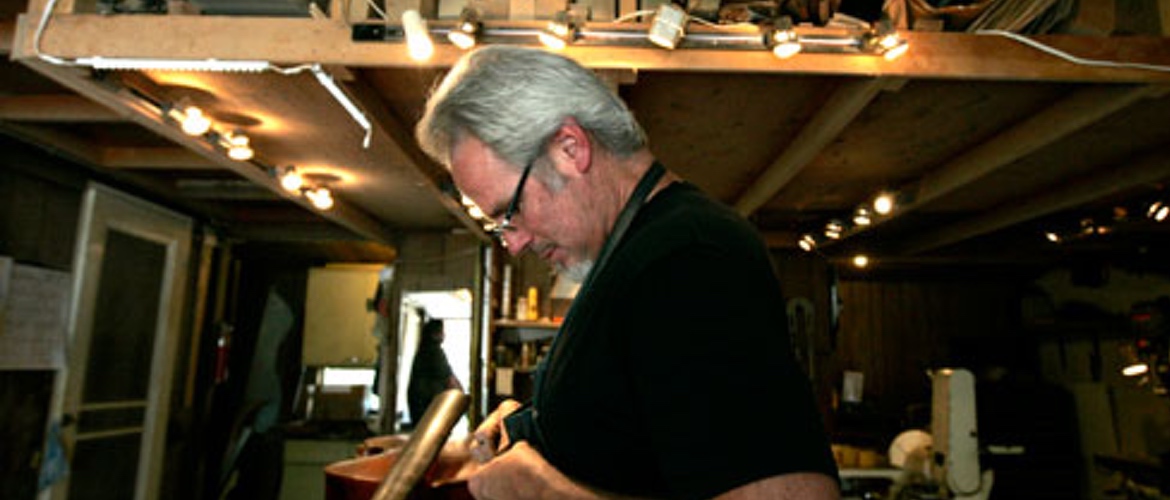
Chris Threlkeld-Wiegand of Heartland String Bass Shop

Chris Threlkeld-Wiegand of Heartland String Bass Shop

Friday’s episode features another interview from the archives with bass maker Chris Threlkeld-Wiegand, who owns and operates the Heartland String Bass Shop. Chris makes beautiful basses and extensions—I actually have one of Chris’ extensions on my main bass.  Chris’ basses are played in major orchestras throughout the United States and are beautiful instruments with great sound.

About Chris:

Chris Threlkeld-Wiegand started playing bass at age nine. He earned a full scholarship to the University of Iowa where he studied under Eldon Obrecht and earned a Bachelor of Music in String Bass Performance. Chris has played with the Quad Cities Youth Symphony, the Cedar Rapids (Iowa) Symphony Orchestra, and the Quad Cities Symphony. He has also performed with many bands during his career, ranging from jazz to blues to folk in communities as far ranging as Nagoya, Japan and Austin, Texas.

Chris has had a life-long interest in the sound and responsiveness of basses. As a player, Chris knows that having a finely tuned instrument is critical, and he recognizes the remarkable difference a slight sound post adjustment or bridge arching can make.

His interest in sound and the influence of craftsmanship and ingenious problem solving led him to world famous Collings Guitars. While working at Collings and living in Austin, his cat (a black one!) knocked over and broke the neck on his bass. At the time, Chris was taking private lessons from Professor David Neubert at the University of Texas. Frustrated with the quality of the repair work on his bass, Chris asked Professor Neubert to recommend a good repair shop. “Albuquerque” was the guiding answer. Robertson & sons Violin shop is one of the world’s finest string instrument repair shops & is located in Albuquerque, NM.

For five years at Robertson & Sons, Chris had the opportunity to learn the craft of bass repair and construction under the tutelage of an acknowledged master, and work on some of the finest basses in the world. From neck grafts to cracks, Chris’s skills were applied to a full range of challenges. But he also developed many original techniques, including installation of custom low C & B extensions that integrate into the scroll rather than cutting the scroll and gluing the extension to the modified scroll.

In 2003 it was time to set up shop in his home state of Iowa, and bring his remarkable set of skills and experiences to musicians in the Midwest. Heartland String Bass Shop is the complete manifestation of a musical life, a commitment to sound, and skills honed under the watchful eye of the finest instrument makers and repairers in the world.

http://traffic.libsyn.com/contrabassconversations/CBC_187__Chris_Threlkeld-Wiegand_Interview.mp3

186: Barrie Kolstein on making rosin, lessons learned from his father, and bass trunk technology

Barrie Kolstein of Kolstein's.

Barrie Kolstein of Kolstein’s.

John Grillo and I recorded this interview with Barrie Kolstein back in 2008, and it has proven to be a very popular episode in the catalog. Barrie runs the Kolstein shop Long Island, and his instruments have been utilized by Jeff Turner of the Pittsburgh Symphony, James Van Demark of the Eastman School of Music, Scott Haigh of the Cleveland Orchestra, and many others.

John Grillo has been frequenting the Kolstein shop for years, and it was great to have John in on the conversation.  This was a great chat about all sorts of bass-related topics.

About Barrie Kolstein:

1967-1971 Kolstein basses
State University of New York at Albany
Obtained a Bachelors of Science Degree in Business Administration and Marketing.
1967-1973
Formally studied the Double Bass under the pedagogues: Frederick Zimmermann, Assistant Principal of the New York Philharmonic; Orin O’Brien, New York Philharmonic; Georges Andre, Metropolitan Opera; Robert Gladstone, Principal Bassist Detroit Symphony; Samuel Hollingsworth, Principal Bassist Pittsburgh Symphony Orchestra; David Holland, renowned Jazz artist.
1971-1974
Served in formal apprenticeship for instrument and bow restoration, construction and appraisals, under the expert auspices of renowned violin and bow maker, restorer, and appraiser, Samuel Kolstein.
1974-1978
Served as staff instrument and bow restorer as well as making numerous new violin and celli with Samuel Kolstein.
1979
Promoted to head violin master in the shop of Samuel Kolstein.
1981
Assumed full business responsibilities for operating all aspects of Samuel Kolstein & Son, Ltd. and Kolstein Music, Inc.
1981 to present
Head violin maker, restorer, and appraiser with a staff of nine violin makers working under his supervision.
Published numerous technical articles on restoration and appraisals in the International Society of Bassists with feature article published in the Strad, February 1991; presently editor of the “Luthier Corner” in the International Society of Bassists magazine restoration and repair forum; published regularly in the Double Bassist magazine and the Strad magazine, both of London, England, since 1996. These articles have ranged form interviews with makers and performers, technical articles on repair/making, and expert appraisal articles on historic master makers; featured in the violinmaking segment of Robin Lehman’s documentary, Young Peoples Guide to the Orchestra; contacted to appear in the upcoming educational video on “Careers in Music”. On the expert appraisers staff of Art Conservation fine arts adjusters as a String Instrument and Bow Expert.

Barrie Kolstein has completed well over one hundred instruments (Violin, Viola, Cello and Bass Violins) utilized by renowned players including Jeffrey Turner, Pittsburgh Symphony; Robert Gladstone, Detroit Symphony; James Van Demark, Professor of Double Bass Eastman School of Music and world famous soloist; Charles Urbont, Metropolitan Opera; James Clute, Minnesota Symphony Orchestra; David Sheets, Baltimore Symphony Orchestra; Lou Norton, New York Philharmonic; Caitlyn Kamanga, Hong Kong Philharmonic;, Scott Haig, Assistant Principal Bassist, Cleveland Orchestra; Hienrich Joachim, renowned soloist and former member of the New York Philharmonic; Lew Norton, New York Philharmonic; Barbara Yendell, Hong Kong Philharmonic, to name a few! Mr. Kolstein is a member of:

Appraisers Association of America, 1994 to present
International Society of Bassists, 1979 – present
Violin Society of America, 1980 – present
Viola Congress, 1983 – present
Cello Congress, 1982 – present
Listed in The Violin Makers of the United States, by Thomas J. Wenberg, Mount Hood Publishing Company, 1986.

http://traffic.libsyn.com/contrabassconversations/CBC_186__Barrie_Kolstein_Interview.mp3

185: George Martin on challenging restorations, the art of varnishing, and riding horses in the English countryside

George Martin of T&G Martin Violins

George Martin of T&G Martin Violins

We are featuring George Martin from Thomas and George Martin Violin Makers. Their shop has been making basses for over 30 years, and they have a wealth of knowledge about the instrument-making and restoration process. George and I dig into these details, talking about some of his most challenging restorations and what goes into making a bass.

Our recent Contrabass Conversations guest Marc Ramirez spoke with me about finding his Cavani bass at the Martin shop (that story starts at the 80 minute mark for that episode).  It was a great story and a great talk in general–be sure to check out Marc’s interview if you haven’t yet–it was episode 173 of the podcast.

About the Martin Shop:

As many will know, The Thomas and George Martin Workshop is just north of the town of Banbury, England in an ancient hamlet.

It took us several months to turn an ancient open fronted stone barn into a sate of the art workshop to continue the family business of making and restoring fine stringed instruments.

The workshop is a warm and happy place to work with an easy working atmosphere. We have an outstanding team of highly skilled individuals who each play an important part in producing and restoring some of the finest instruments in the world. The workshop operation is cared for and managed on a daily basis by George, while Tom is often called in to give advice and check all the new basses. Please have a look at our meet the team page to get to know everybody better.

The workshop team has now produced a large number of double basses, several fine cello’s, and a few violas and violins. We have also had the privilege to repair and restore some wonderful instruments over the years as well as performing minor adjustment and set up work for players just starting out to the worlds best professionals.

http://traffic.libsyn.com/contrabassconversations/CBC_185__George_Martin_Interview.mp3

184: Nick Lloyd on the craft of bass making, building flat backs, and traveling to Pakistan

Double bass luthier Nick Lloyd

Double bass luthier Nick Lloyd

Nick Lloyd has become one of the top double bass makers in the country over the years, with award-winning basses being played worldwide, including talents as diverse as New York Philharmonic principal bassist Tim Cobb and YouTube sensation Adam Ben Ezra.

We talk about Nick’s early years learning the bass, apprenticing with various makers and learning the craft of bass making, the intricacies of making a bass, his standard bass designs, travel necks, his financing options for basses, and playing with the Kentucky Winders in Pakistan!

About Nick:

I was born in central Iowa, and first met the doublebass at age 8. In 1993 I moved to Boston to freelance and attend the Longy School of Music. As my interests developed, a question remained unanswered: how is a doublebass made? Well, Boston luthier & bassist John Styklunas was the first to answer that question.

It’s been over 20 years now, and my teachers also include Michael Shank, Paul Hart, and Daniel Hachez. All of these luthiers have helped me assemble the skills and high standards necessary to make and repair professional-quality double basses. Most importantly, my training has taught me to always respect the client, regardless of what kind of music they play.

Since establishing my Cincinnati shop in 2000, my instruments have received awards for tone and workmanship. In addition, I received the 2007 “Friend Of The Bass” award from the International Society of Bassists for organizing the Katrina Basses project.

In 2015, in conjunction with the State Department and musical group the Kentucky Winders, I became a U.S Cultural Ambassador. This position includes traveling internationally to promote traditional American music as well as performances with ethnic musicians of respective host countries.

http://traffic.libsyn.com/contrabassconversations/CBC_184__Nick_Lloyd_Interview.mp3
  • Prev Page...
  • 1
  • …
  • 192
  • 193
  • 194
  • 195
  • 196
  • …
  • 231
  • ...Next Page
Facebook
Twitter
Instagram
YouTube

Copyright © 2026 · Maron Pro Theme on Genesis Framework · WordPress · Log in